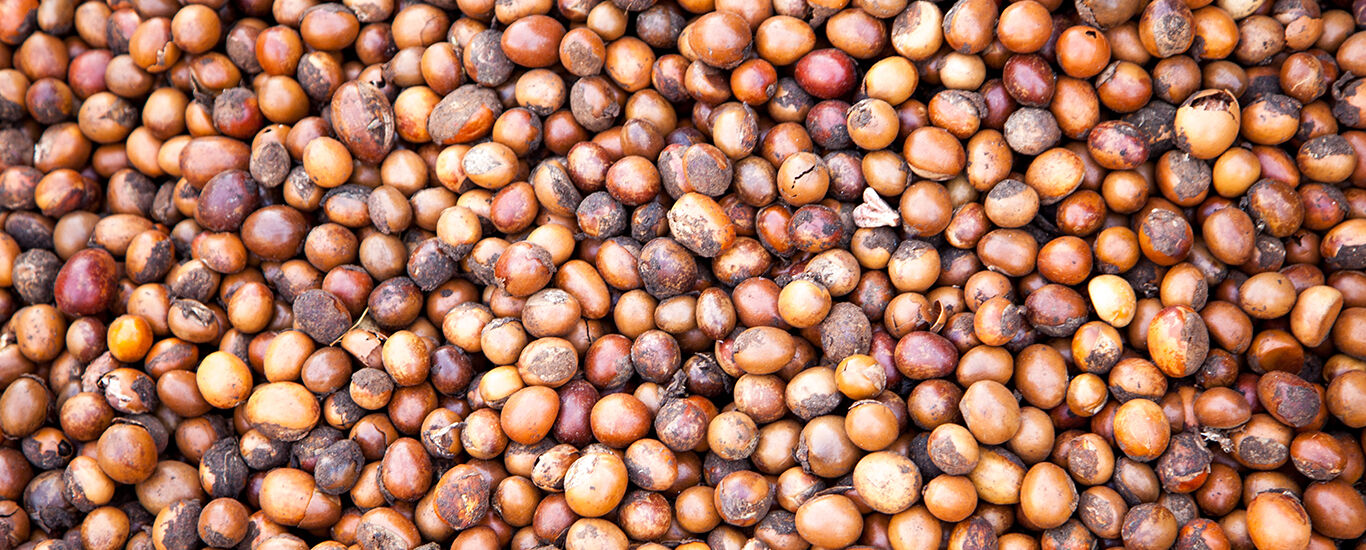
Close-up of many shea nuts

The shea tree – a magical all-rounder

In a nutshell

Scientific name: Butyrospermum parkii G.DON.

Common names: African butter tree, shea tree, karité tree, shea butter tree

Family: Sapotaceae (Sapote family)

Origin: Tropical Africa

Growing regions: West and Central Africa

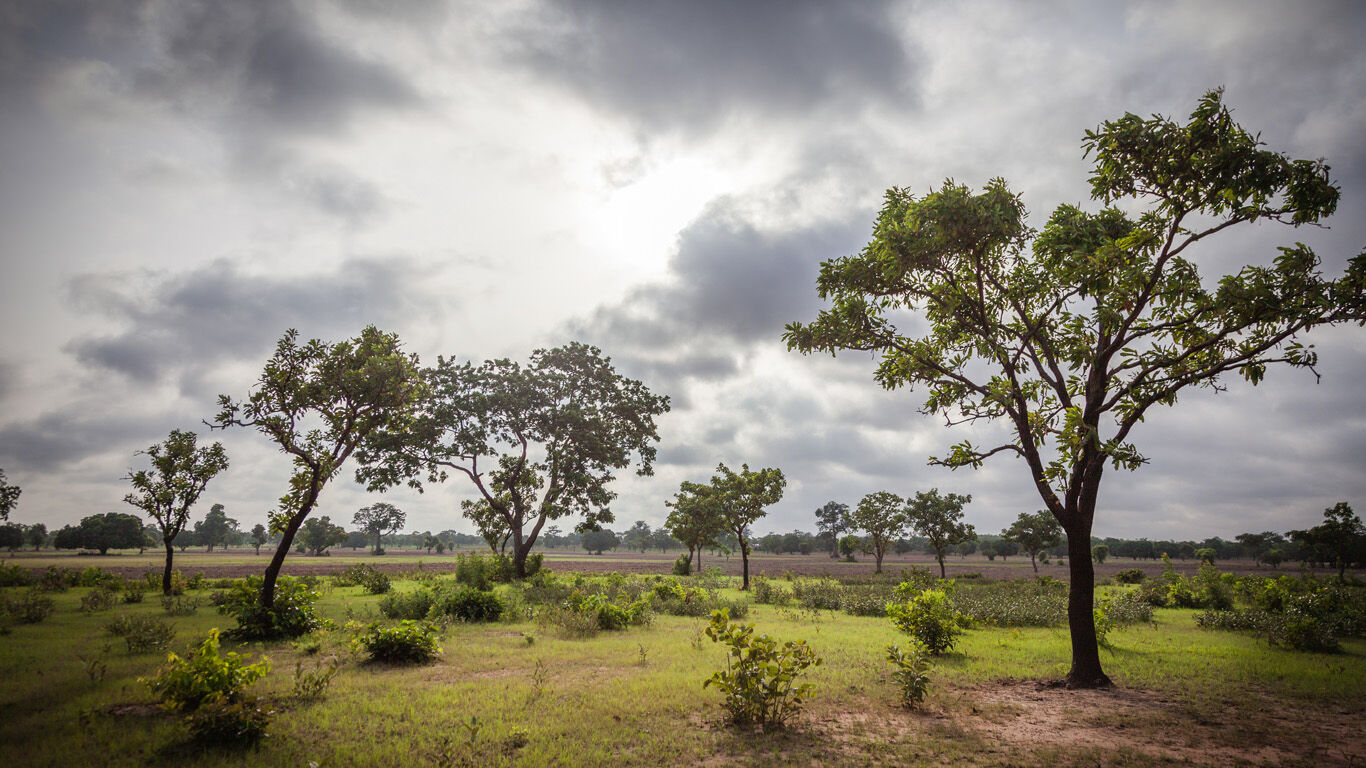
Botany: The shea tree grows to a height of 6 to 12 meters and is as gnarled as an oak.

Flowering period: The tree does not flower until it is 20 years old and reaches its maximum yield at 40 to 50 years.

Parts of the plant used: Fats and oils from the nuts

Shea trees in a field

Historical and traditional uses

In its native Africa, the shea tree is an important source of food—partly because of the sweet flesh of its fruit, and partly because its nuts can be used to produce a popular cooking fat. In addition, shea butter traditionally plays an important role in skin care and is used for massage to relieve rheumatism, muscle, and joint pain.
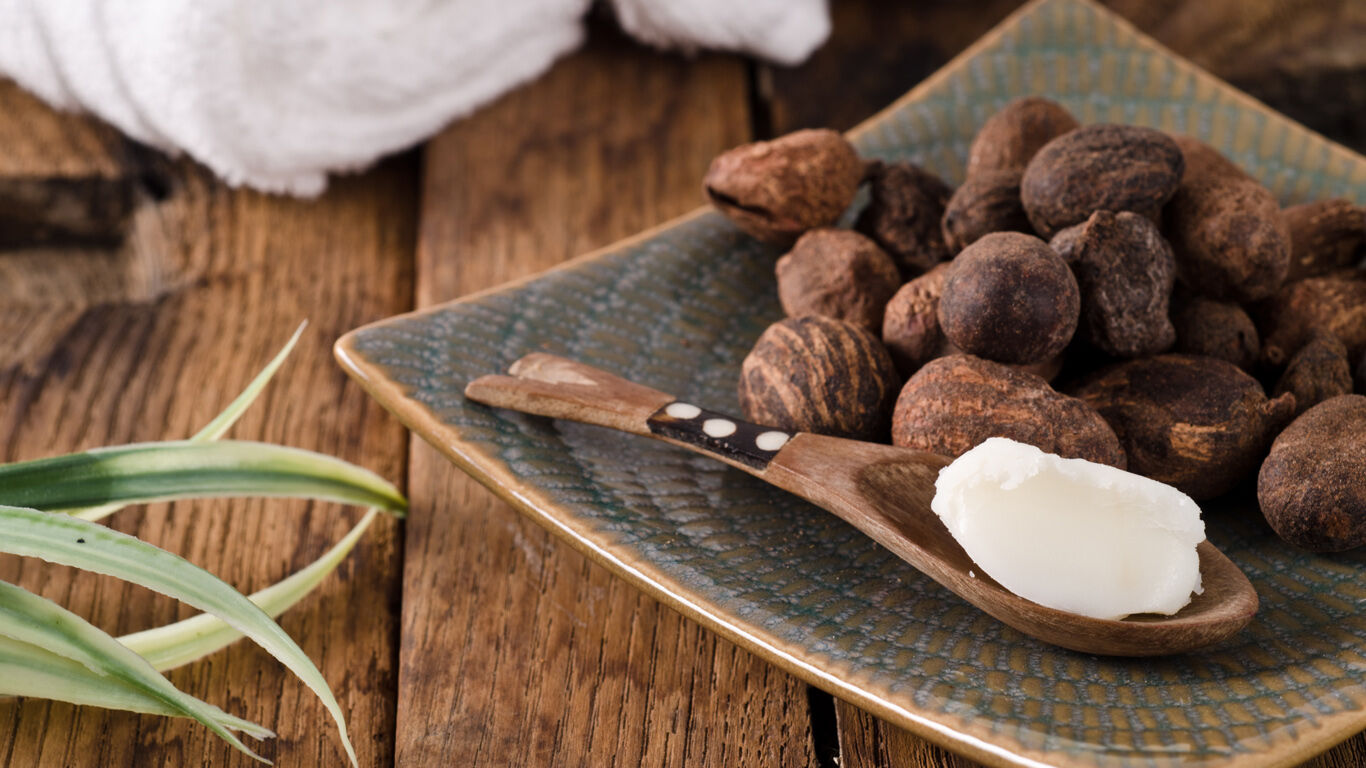
Shea nuts on a greenish plate with a wooden spoon full of shea butter

Current use

We primarily value the benefits of the shea nut in cosmetics. Creams containing shea butter spread quickly and evenly over the skin. Shea butter also contains valuable allantoin and vitamin E, which are skin-nourishing ingredients.


Due to their high content of unsaponifiable plant components, the oil and butter possess excellent moisture-binding properties. This gives the skin a pleasantly soft and supple feel—which is particularly beneficial for people with dry skin or skin prone to dryness. They can help support the healing of superficial skin injuries and soothe irritation. Thanks to its nourishing properties and good tolerability, shea butter is recommended even for skin prone to allergies.

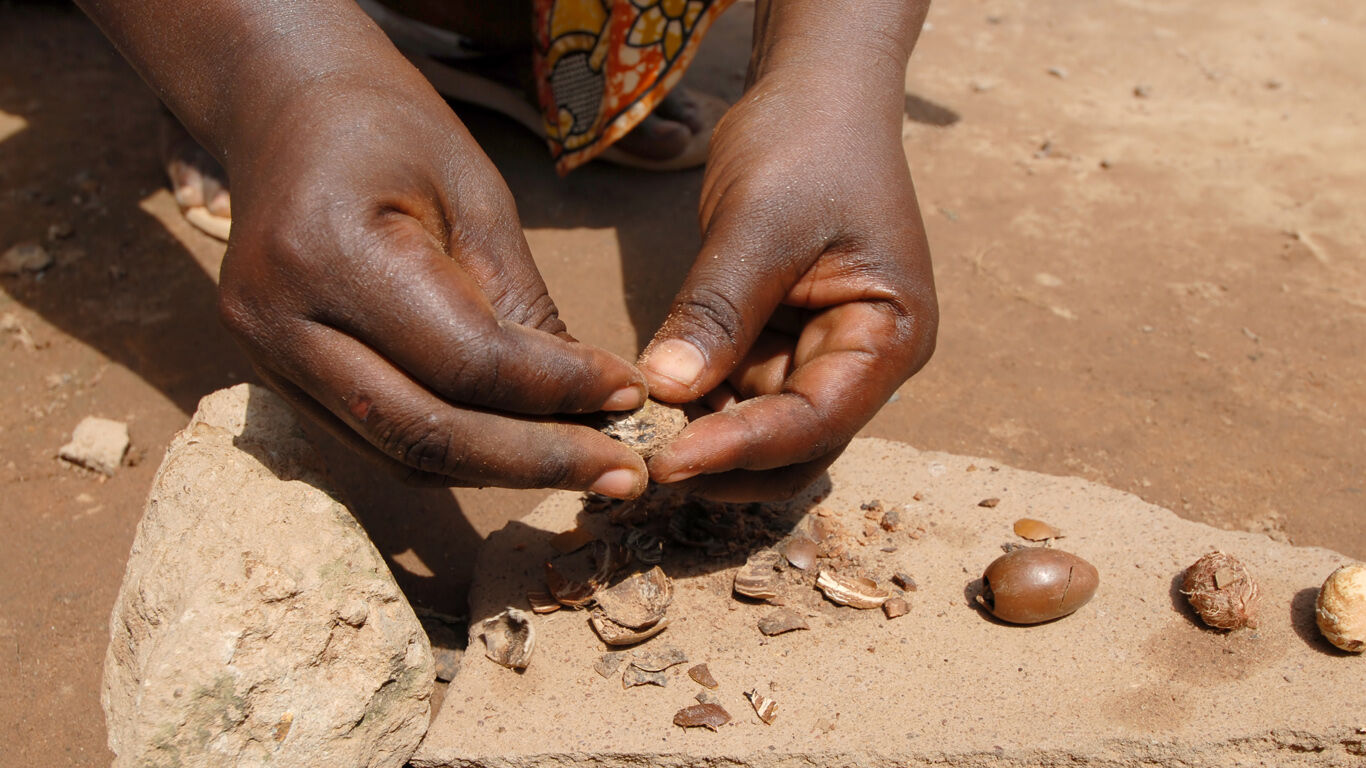
Woman shelling shea nuts

Did you know?

In Africa, the shea tree is believed to possess magical powers. Only women, as the tree’s guardians, are allowed to harvest its fruit as part of a ritual ceremony.

You might also be interested in:

Une femme aux cheveux foncés est allongée sur un ponton et tend la main vers le lac.

Pleine conscience, équilibre entre vie professionnelle et vie privée & Co. : la philosophie des 5 piliers de Sebastian Kneipp est plus actuelle que jamais.

fleurs jaunes cueillies dans un panier.

De l'arnica à la verveine citronnée: lire maintenant le lexique des plantes Kneipp.

Sur un fond rose, une femme jette la tête en arrière et les mains en l'air.

Peau sèche et sensible ? Réapprends à aimer ta peau.

Gros plan d'une olive noire sur une branche avec une goutte d'huile qui coule.

Utilisées pures ou dans des crèmes et des lotions, les huiles végétales soignent la peau naturellement.